Era Pickleball pickleball training: Unlock Your Potential with Pro Tips
Every sport has a certain tipping point where talent meets technique, where time spent on the court translates into smarter play and fewer wasted movements. For pickleball players, that point often arrives not through sheer athleticism alone but through a disciplined approach to training. The Era Pickleball pickleball training path I want to share here is rooted in real-world practice, built around deliberate repetition, thoughtful reflection, and a coaching philosophy that respects the quirks of this fast-moving, joyously strategic game.
If you’re exploring pickleball classes Era Pickleball offers, you’re stepping into a program designed to translate beginners into confident players and to elevate the steady intermediates into game-changers. The terrain of pickleball is simple at first glance—smash, dink, volley, defend—but the nuances pile up quickly. A well-constructed training routine can turn those nuances from stumbling blocks into dependable options, turning a decent rally into a decisive point.
Getting started with era pickleball training is not about chasing quick fixes or cramming a checklist into a practice session. It is about building a lasting sense of pattern recognition on the court, a dependable set of footwork habits, and a mental framework that stays calm under pressure. It’s about learning to move with intention rather than simply moving fast. The best pickleball classes Erapickleball.com promotes concentrate on those axes: technique, rhythm, strategy, and situational awareness, all woven together with feedback that is specific and usable.
What makes Era Pickleball pickleball classes distinctive is their emphasis on consistency. The training philosophy assumes players want to progress without wasting time on marginal improvements. It treats footwork as a core skill rather than a decorative flourish. It treats the serve as a weapon that needs practice in varying spins and speeds, not a single action to be performed once per game. It treats mental reset as part of the drill, a mechanism that keeps your decision-making clean even after a tough mistake.
If you’re a coaching student reading this, you already know that coaching matters. The value of Era Pickleball coaching is not just the instruction but the way it invites you to see the game differently. A good coach in pickleball is not another voice in your ear; they are a mirror, a game designer, and a tactician bundled into one human being. They help you connect the dots between a drill and a match, between a practice outcome and a scoreboard implication.
This article threads through practical steps, actionable drills, and the kind of everyday adjustments that separate good players from great ones. It’s written from the perspective of someone who has spent countless hours on court corners, watching shape-shift rallies unfold, noticing when a player’s grip changes a volley trajectory, or when a player’s weight transfer becomes late and stiff in the hips. You’ll find concrete, testable ideas you can try the next time you step onto the court, whether you’re in a class, a private coaching session, or practicing solo at home with a rebounder.
Springboard for real progress is usually five things in combination: a solid technique foundation, a consistent footwork ladder, a tactical awareness of when to press and when to defend, a physical conditioning plan that respects the sport’s demands, and a mental routine that keeps nerves from turning into hesitation. Era Pickleball training is designed to serve all five, but you don’t have to conquer them all at once. Start where you are, pick a single improvement target, and let the other elements unfold as you gain confidence.
The fundamentals begin with grip, stance, and the ready position. A common rookie mistake is to grip too tightly on the paddle, which robs wrist snap and reduces feel for the ball. A relaxed grip, with the paddle angled slightly toward the target, gives you the capacity to adjust on the fly as the ball approaches, and it preserves the delicate upgrade path toward more advanced strokes. The stance should be athletic but not rigid: knees lightly bent, weight slightly forward, feet shoulder-width apart, eyes level with the arc of the ball. From there, breath becomes part of the craft. A steady inhale as the ball rises, a controlled exhale as it closes in, and a calm, focused gaze that doesn’t chase the ball endlessly but follows it as it comes into the hitting zone.
The dink is the heartbeat of pickleball. It’s not a one-time shot, but a pattern you live in during long rallies. In Era Pickleball pickleball training, dink consistency is built through small, repeatable actions: settle the paddle early, keep the paddle face level, and guide the ball softly to the kitchen. In practice, I often set up a drill where players step up to the net with a partner, and the objective is to push the ball down to a precise target area with the least amount of swing possible. The brain responds to gentle, repeatable motion. The body learns to anticipate the opponent’s return by watching shoulder cues rather than the ball alone, which is an improvement that carries into all sport-specific footwork patterns.
On the other side of the net, the drive volley and the overhead smash require a different rhythm. They demand torque, speed, and a sense of when to finish the point decisively. The Era Pickleball pickleball training approach recognizes that a powerful shot without accuracy is a liability in late-stage rallies. So the training emphasizes tempo control: a compact backswing, a transfer of weight through the hips, and a horizontal finish that keeps the paddle square to the ball. It’s easy to overswing, especially when the opportunity seems obvious. Coaches help you recognize the moment when pressure should push you into a controlled finish rather than a full-throttle attempt. The best drives come from a blend of intention and restraint.
The serve is often underestimated as a strategic instrument. A service return can decide a rally before it begins. In practice rooms, coaches push players toward variety—flat serves for speed, spin serves for movement, short serves that force a miscue. The training protocol encourages you to categorize serves not by preference, but by effect. If your opponent struggles with a backspin ball to the feet, you shape your practice around that weakness. If you see your opponent leaning forward early and compromising their balance, you practice serves that push into their launch vector. The ability to switch gears in seconds, to deploy a weapon with a purpose, distinguishes the players who win long points from the rest.
Conditioning and movement efficiency are not afterthoughts in era pickleball training. The questions of why endurance matters, how to train for lateral movement in a game that favors short bursts, and how to recover quickly after a point are all answered with a practical, sport-specific lens. You won’t find a generic cardio plan here; you’ll encounter routines designed around the court’s geometry and the typical energy cycles of a six to ten point rally. Lateral shuffles, scissor steps, and quick pivots are integrated in ways that protect the knee and ankle joints while preserving speed. A well-designed conditioning protocol acknowledges the risk of overuse injuries common to racket sports and builds in deliberate rest to balance muscular development with neural adaptation.
In many ways, the most important training occurs off the court between sessions. A good coach will translate on-court performance into an at-home practice mindset. A simple ball-return drill can become a mental cue to reset after error. A wall drill is not just a way to get extra reps; it becomes a place to test second-serve options under pressure, to work on touch with one hand, and to refine the feel for the paddle’s impact area. The discipline is in sustaining a routine that feels doable rather than a heroic sprint that leaves you with soreness and sore days.
The era pickleball coaching ecosystem recognizes that different players learn in different ways. Some respond to video feedback, watching slow-motion sequences to identify grip tension and paddle alignment. Others learn best through kinesthetic cues—feeling the stretch in the shoulder on a forehand, noticing the subtle shift in weight as you load for an inside-out swing. The coaching teams at erapickleball.com are careful to frame feedback in ways that are actionable in the next drill, not after a long seminar. You want to finish a session with a clear takeaway, not a new anxiety about what you should fix next.
One of the most important decisions you face in this journey is choosing a training cadence that matches your life. It’s tempting to chase a perfect three-day-a-week regime, but life isn’t a lab and progress isn’t linear. The most successful players I’ve watched balance intensity with consistency. A typical week may include two solid on-court practice sessions, one lighter recovery day, and two short, focused home drills. The key is the quality of those drills, not the quantity. If you can carry a handful of high-impact cues from session to session, you will see cumulative gains that feel inevitable rather than surprising.
Let me share a few concrete moments from the years I spent coaching and playing in and around era pickleball training environments. A player I worked with gradually learned to place dink targets with such precision that they started forcing opponents to stretch into awkward contact zones. This small improvement alone shifted the pace of several rallies. Another student, who initially moved in short, jerky bursts, began using a more economical approach to change of direction. The difference wasn’t dramatic in any single drill, but over weeks the improvement translated into fewer unforced errors during late rallies. A third player took to the net with a quiet confidence, using a deliberate early step to crowd their opponent, then finishing with a crisp drive that found the seam between service box thresholds.
The coaching staff also emphasizes the importance of match awareness. A good training regimen doesn’t end with a flawless rally in a practice court; it extends into competitive contexts where the stakes feel different and the nerve endings are more exposed. In many eras of the sport, players learned most about themselves in the heat of a tournament, when the court lights seem to magnify every decision. The Era Pickleball approach builds that awareness gradually by simulating match-like conditions in practice. It might be a controlled two-on-two drill designed to mimic the talk and tempo of a real match, or a pressure drill where a player has to navigate a late point with a specific strategic objective.
What does success look like after weeks or months of this training? It is not necessarily a dramatic breakthrough. It is a steady climb in consistency, a quiet confidence in contact with the ball, and a surprising ease in handling different playing styles. It is learning to pace yourself through a long rally and to conserve energy for the critical moment. It is the ability to switch from defense to offense with a deliberate choice rather than a reaction, to recognize when your opponent is about to abandon the backhand slice and exploit that tendency with a well-timed cross-court shot. It is the sense that your decisions are becoming more predictable to you and less dependent on adrenaline.
If you want a practical entry point, start with a simple, repeatable routine that you can perform three times a week. It should be compact enough to fit into a lunch break or a short evening window, but robust enough to challenge your body and your mind. Here is a compact framework that aligns with era pickleball training principles:
- Warm-up with dynamic movements that mirror on-court actions: light jog, side-to-side shuffles, ankle and hip mobility rotations.
- Drill six to eight minutes on the dink line, focusing on paddle height, soft contact, and placement accuracy. Alternate targets every few reps to build versatility.
- Move to the serve and return station, emphasizing variety and spin, then complete a dozen balls with deliberate control rather than speed.
- Finish with a short finish drill at the net, using controlled drives and precise footwork to maintain balance while finishing points.
- End with a quick mental reset: a one-minute breathing routine followed by a single intention for the next session.
The suggestion above is not a rigid prescription; it’s a microcosm of what can be scaled into longer sessions or adapted for different skill levels. For beginners, emphasize the dink and return rhythm, then gradually layer in serves and net plays as confidence grows. Intermediate players can push the tempo on rotations and add more complex spin variations, while advanced players may focus on court positioning for multi-ball sequences and pressure-point decision-making.
Era Pickleball pickleball training is not merely about honing the mechanics of strokes. It also requires a fearless embrace of the sport’s strategic landscape. The court is a chessboard where each rally is a sequence of micro-decisions. Where should you stand to deny your opponent options? When should you break rhythm to keep them guessing? How can you control the pace so that your best shot becomes the weapon of choice rather than a lucky strike? The answers arrive through deliberate practice, through drills that force you to confront these questions under timed pressure, and through coaching that asks you to articulate your own thought process after each rally.
As a final reflection, consider how you measure progress in pickleball training. Numbers matter, of course: win rates, rally lengths, error counts. But meaningful progress also arrives in the absence of numbers. It appears as a smoother transition from defense to offense, when a player reads an opponent’s intention one beat earlier, or when a dink lands softly in a corner that previously produced a difficult reply. Real progress shows up in confidence—when you step into a point with your own plan rather than reacting to your opponent, and when your body seems to understand the court’s rhythm without forcing it.
Era Pickleball coaching understands that progress is not a line, but a weave of small victories and stubborn plateaus. The best players I know treat plateaus as opportunities to sharpen one precise skill rather than a sign that all is lost. They track their development not with vanity metrics but with a practical log that captures what worked, what didn’t, and why. They know that sometimes the right move is to slow down in the moment, to reset, and to trust the learning process rather than chase results that feel urgent in the short term.
If you are considering enrolling in pickleball classes Era Pickleball runs, I would suggest paying attention to the coaching style and the level of feedback you receive. Do the instructors provide concrete cues that you can apply within a single practice session? Do they tailor drills to your specific tendencies, or do they rely on one-size-fits-all sequences? The most valuable coaches I have encountered do both: they teach universal mechanics while also diagnosing your personal patterns and turning those insights into practical steps you can implement in your next rally.
As you move forward with era pickleball training, it’s worth thinking about how you want your game to look six months from now. Do you want to be the player who steadies rallies and wins with precision? Or the player who thrives on tension, who can tilt any match by imposing pace at the right moment? The path you choose determines not just your drills but your daily habits. It determines how you allocate time between on-court sessions and off-court conditioning. It shapes how you approach rest and recovery, the importance you give to nutrition for sustained performance, and how you balance practice with competition.
And while the journey is uniquely yours, you will not walk it alone. The era pickleball training ecosystem thrives on shared learning and community support. You will meet teammates who push you, coaches who challenge you, and a culture that values careful analysis over bravado. In that environment, your improvement becomes more than a personal goal. It becomes a shared standard that raises everyone around you, turning crowded courts into laboratories of skill and thought.
To summarize the heart of this approach: the Era Pickleball pickleball training framework centers on technique grounded in practical motion, movement efficiency built through thoughtful repetition, tactical sensibility cultivated through realistic drills, and mental composure reinforced by routines that transfer from practice to competition. It emphasizes coaching that is particular and responsive, and a training cadence that respects life’s rhythms while demanding consistent effort. It invites you to test your assumptions, to measure what you can change, and to make the next rally better than the last.
If you’re curious about the precise offerings, the best next step is to explore erapickleball.com pickleball training options and to observe how the classes Era Pickleball provides address your current goals. Look for a program that blends private coaching with group dynamics, that offers both structured drills and on-court play tailored to your level, and that frames feedback in a way you can implement in real time. The right environment makes all the difference, especially when you’re learning to translate drills into match-ready instincts.
In practice, the difference between a casual player and a consistent performer often comes down to two things: how you practice and how you reflect on what you practiced. Practice with intention, track your small wins, and let your errors teach you without breaking your momentum. That is the core ethic of era pickleball training, a philosophy that treats progress as a steady river rather than a cliff you must leap in a single bound.
A final note on patience and realism. There is no magic spell in the paddle that will instantly erase a bad habit or erase the sting of a missed point. Real improvement takes time, and it demands sustained attention to the details that compound over weeks and months. The most impressive players I’ve had the pleasure to observe achieved their growth through patient, consistent work that respected the craft. They did not chase the loud, flashy improvements. They built a durable, repeatable set of movese that served them well when the court grew crowded and the rallies grew long.
If you are just starting this journey, a single request: give yourself permission to learn slowly. The game will reward you for that patience. The court will become a forgiving teacher if you bring curiosity, discipline, and a readiness to adapt. The Era Pickleball pickleball training path is designed to support you through that process. It invites you to think clearly, move efficiently, and play with a sense of purpose that remains steady in pressure. And when you do that, the sport stops feeling like a collection of isolated skills and begins to feel like a coherent, intelligent game where you are always pushing one step ahead of your opponent.
For the curious and the committed, the journey is worth taking. A walk through the courts reveals the trajectory of players who invest in their craft: a gradual sharpening of touch, a more reliable serve, and a growing sense of when to press versus when to hold. The training ethos behind Era Pickleball coaching embraces that deferred gratification, knowing that the long arc of improvement is what makes good players truly great.
If you’re ready to start, consider booking a session, watching a few instructional videos, and then diving into a structured practice plan that aligns with your current level. The balance of technique, movement, strategy, and mental game is where find out more real leverage lies. With the right coach, the right practice partner, and the right mindset, you will unlock a higher ceiling than you imagined possible, not through luck but through deliberate, thoughtful, and well-timed practice.
A few practical reminders as you set your goals:
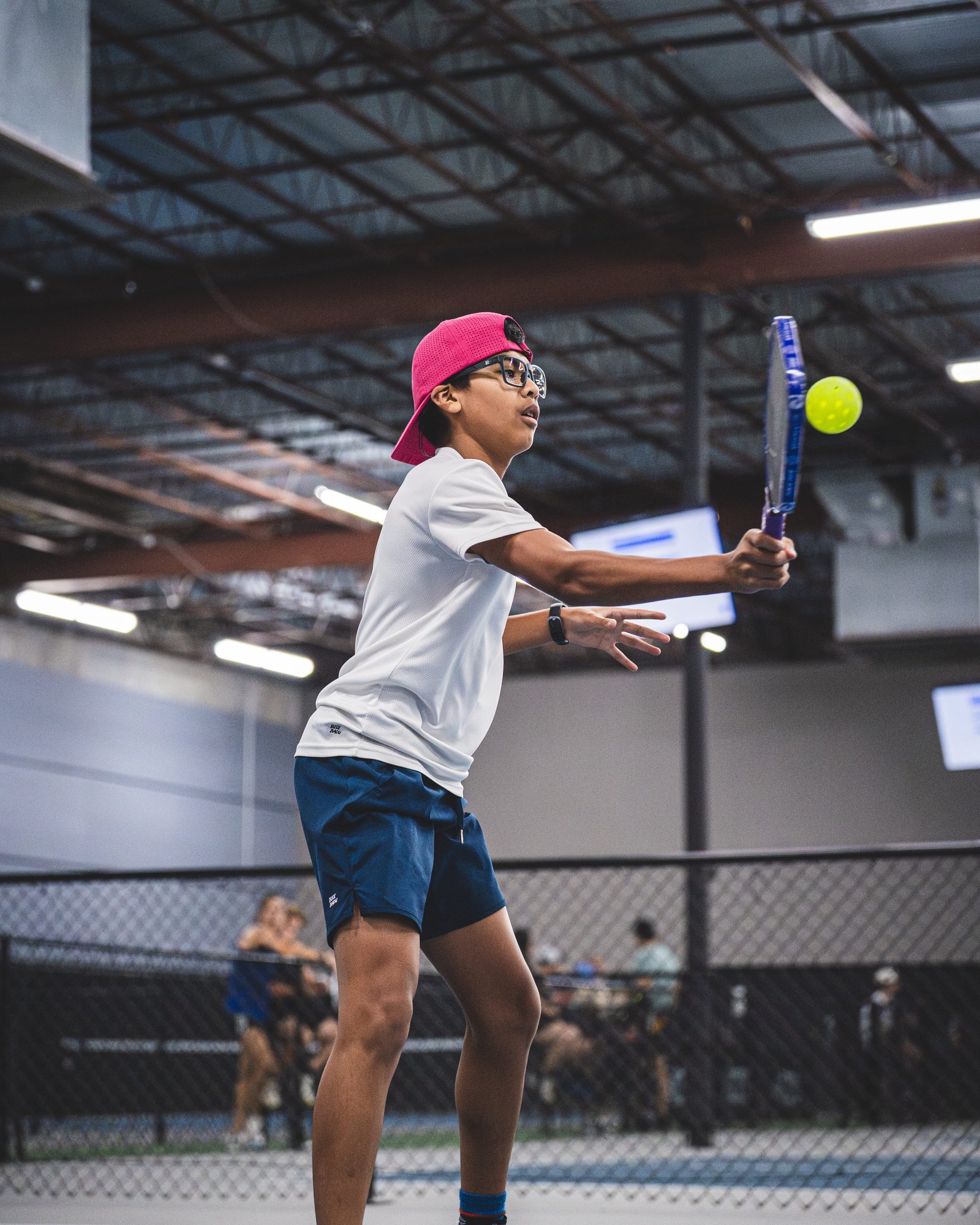
- Focus on the dink and the return first. These two strokes lay the foundation for every rally.
- Build a routine that you can sustain. Consistency beats intensity when it comes to long-term improvement.
- Seek feedback that you can act on immediately. The gap between observation and execution is where progress lives.
- Prioritize comfort and safety. Correct alignment and a balanced stance protect you when the tempo ramps up.
- Treat every session as an opportunity to practice a new habit, not merely to rack up points.
In the end, the journey through Era Pickleball pickleball training is a personal one with communal benefits. You become a better player, yes, but you also contribute to a culture that values careful craft, honest feedback, and steady progress. The courts are crowded with people who share the same goal: to keep getting better, one drill, one rally, and one match at a time. If you step onto the court with that frame of mind, you will find that your potential is not a fixed ceiling but a horizon that gently expands with every practice you commit to.
Remember that you do not have to do this alone. Reach out to Era Pickleball coaching staff, check the available pickleball classes Era Pickleball offers, and let your next practice be the start of a new chapter in your game. The sport rewards the patient learner, and your future self will thank you for the discipline you showed today.
Corrections
Spot something wrong? Send it to the desk and it gets fixed in the open.